The Problem: Manual River Monitoring and Flood Risk
A large lifestyle estate on the outskirts of Johannesburg was forced to rebuild a bridge on the estate over the Jukskei River after recurring flood damage.
While the new bridge structure itself was engineered to withstand the force of floodwaters, the safety railings presented an ongoing challenge. During high-flow events, the railings needed to be removed in advance to prevent them from being damaged or washed away, only to be replaced once water levels subsided.
The problem was that during flood season, the river level had to be checked constantly to ensure the railings were removed in time. Compounding this issue, the bridge is located in an area with no cellular or Wi-Fi coverage, making traditional remote monitoring solutions impractical and requiring manual inspections at precisely the wrong time—during heavy rain and rising water levels.
The Solution:
A LoRaWAN-Based IoT Flood Warning System
Power DOT Data was asked to design a solution to automate river-level monitoring and provide early warnings when water levels start rising rapidly.
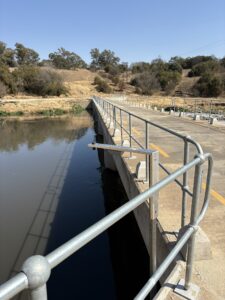
Seeed Technologies IoT Data Logger and Sensor
Our approach immediately leaned toward LoRaWAN (admittedly, we are fans of IoT and LoRaWAN) for its long-range, low-power capabilities and suitability for remote environments with limited connectivity.
The solution uses:
- A LoRaWAN data logger from Seeed Technologies
- An RS485 ultrasonic distance sensor to measure river level
- A MikroTik LR8 LoRaWAN gateway
- The Things Network (TTN) for data ingestion and decoding
- ThingsBoard for data storage, visualization, and alerting
- A Heltec Wireless Stick V3 for local output control
The sensor transmits river-level data every 120 seconds to the LoRaWAN gateway, which is installed approximately 800 m from the river at the estate’s technical centre - an area with reliable internet connectivity.
From there, the data is forwarded to TTN, where it is decoded and converted before being sent to ThingsBoard for storage and visualization. This gives both the client and estate management access to a clear, easy-to-read dashboard with real-time and historical river-level data.
Automated Alerts and Warnings
Alerts are configured within ThingsBoard at predefined river-level thresholds.
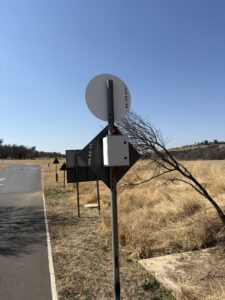
When these thresholds are reached:
- A warning strobe light mounted at the bridge is activated, alerting pedestrians and motorists to stay clear
- Automated messages are sent to a dedicated Telegram group, notifying the relevant stakeholders that river levels are rising
This multi-layered alerting approach ensures that both on-site and off-site personnel receive timely warnings - without relying on manual checks or existing cellular coverage at the bridge.
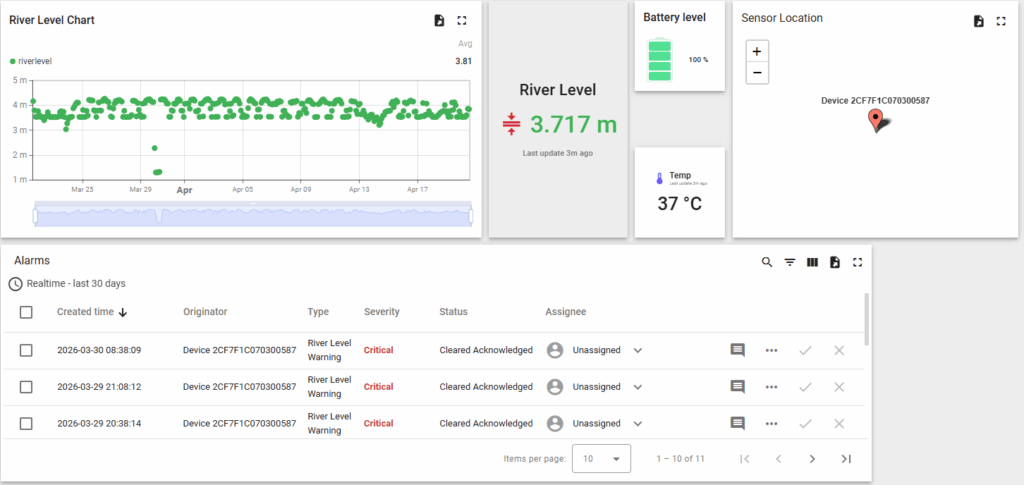
IoT river flood early warning system dashboard
Why IoT Flood Warning Matters
This deployment transformed flood response on the estate from manual, reactive monitoring into a fully automated early warning system.
By combining long-range LoRaWAN connectivity with real-time analytics and automated alerts, the estate now has advance visibility of flood conditions - allowing infrastructure damage, safety risks, and unnecessary replacements to be significantly reduced. In areas in South Africa where people and livestock live close to river banks in areas where connectivity is an issue, IoT could save lives by providing early warning.